INDICATIONS

Repatha® is indicated:

  • To reduce the risk of major adverse cardiovascular (CV) events (CV death, myocardial infarction, stroke, unstable angina requiring ... READ MORE

IMPORTANT NOTICE: DISCONTINUATION OF THE REPATHA® (EVOLOCUMAB) PREFILLED SINGLE-DOSE SYRINGE

Please direct your patients to Amgen® SupportPlus: A dedicated transition support line through 844-Repatha (1-844-737-2842), prompt 2 to assist with Q&A, process, and new Repatha® prescriptions.
Hours:
Monday-Friday 8:00 am - 8:00 pm ET.

Amgen has made the decision to discontinue the Repatha® prefilled syringe.

This decision was made to uphold the high standards Amgen has for patient experience. We have seen unprecedented demand for Repatha® globally and in the United States. We are focused on meeting the growing demand for Repatha® that we expect will continue, while delivering the best experience for adults at increased risk for major adverse CV events (MACE) and hypercholesterolemia.

As part of our long-term planning, we did an evaluation of the device presentations in the US. Today there are 2 device presentations:

  • 140 mg/mL prefilled single-dose SureClick® autoinjector not made with natural rubber latex.
  • 140 mg/mL prefilled single-dose syringe.

We plan to discontinue the Repatha® prefilled syringe by Q1 2026. All patients should transition to the SureClick® autoinjector not made with natural rubber latex and require a new prescription.

Transitioning Patients to a New Device with a Prescription

There are no concerns about the Repatha® drug product, efficacy, or patient safety. Alternative presentations are available, and Amgen has sufficient product to meet the demand of patients transitioning from the prefilled syringe.

HCP Action Required:

  • Refrain from prescribing the prefilled syringe for any new Repatha® patients.
  • Transition all refill patients to the SureClick® autoinjector (NDC 72511-393-02).
  • Educate transitioning patients that this is a device change only—their medication and dose remain unchanged.
  • Inform patients they can learn more about how to take Repatha® by visiting www.repatha.com/injection for Instructions for Use, a Demo Video, and other helpful resources.

The Repatha® SureClick® autoinjector is available and will be appropriate for most patients. However, they will require a new prescription to transition.

Prefilled single-dose syringe
Discontinued
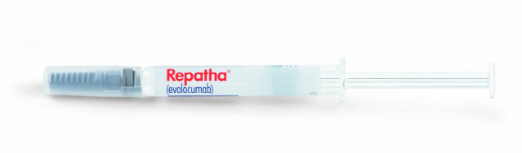
Prefilled single-dose syringe 1

The Repatha® prefilled single-dose syringe will be discontinued
effective Q1 2026.

140 mg/mL prefilled
single-dose syringe
(NDC 72511-501-01)

SureClick®autoinjector-
Active and Available
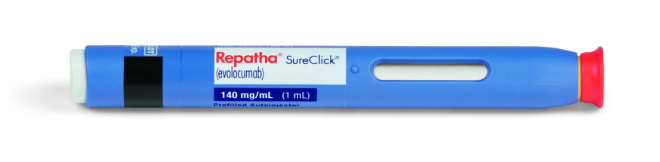
SureClick-Autoinjector 1

The Repatha®SureClick® autoinjector will be appropriate for most patients. A new prescription is required.

Repatha® 140 mg/mL
prefilled single-dose
SureClick® autoinjector
(NDC 72511-393-02)

Next Steps to Support Your Patients

Amgen is committed to supporting existing patients’ transition and has several dedicated services in place, including:

  • Amgen SupportPlus®: A dedicated transition support line through 844-Repatha (1-844-737-2842), prompt 2 to assist with Q&A, process, and new Repatha® prescriptions.
  • Hours: Monday-Friday 8:00 am - 8:00 pm ET.

Additional resources to help facilitate the transition for your patients:

You and your team might want to know more about the process and the rationale behind this decision. Please review the FAQs document for more information.

We appreciate your support and collaboration as we make this transition.

If you need more information, don't hesitate to contact Amgen MedInfo at
medicalinformation@amgen.com

Sincerely,

Amgen Inc.

Important Safety Information

Contraindication: Repatha® is contraindicated in patients with a history of a serious hypersensitivity reaction to evolocumab or any of the excipients in Repatha®. Serious hypersensitivity reactions including angioedema have occurred in patients treated with Repatha®.

Hypersensitivity Reactions: Hypersensitivity reactions, including angioedema, have been reported in patients treated with Repatha®. If signs or symptoms of serious hypersensitivity reactions occur, discontinue treatment with Repatha®, treat according to the standard of care, and monitor until signs and symptoms resolve.

Adverse Reactions in Primary Hypercholesterolemia: The most common adverse reactions (>5% of patients treated with Repatha® and more frequently than placebo) were: nasopharyngitis, upper respiratory tract infection, influenza, back pain, and injection site reactions.

From a pool of the 52-week trial and seven 12‑week trials: Local injection site reactions occurred in 3.2% and 3.0% of Repatha®-treated and placebo-treated patients, respectively. The most common injection site reactions were erythema, pain, and bruising. Hypersensitivity reactions occurred in 5.1% and 4.7% of Repatha®-treated and placebo-treated patients, respectively. The most common hypersensitivity reactions were rash (1.0% versus 0.5% for Repatha® and placebo, respectively), eczema (0.4% versus 0.2%), erythema (0.4% versus 0.2%), and urticaria (0.4% versus 0.1%).

Adverse Reactions in the FOURIER Cardiovascular Outcomes Trial: The most common adverse reactions (>5% of patients treated with Repatha® and more frequently than placebo) were: diabetes mellitus (8.8% Repatha®, 8.2% placebo), nasopharyngitis (7.8% Repatha®, 7.4% placebo), and upper respiratory tract infection (5.1% Repatha®, 4.8% placebo).

Among the 16,676 patients without diabetes mellitus at baseline, the incidence of new-onset diabetes mellitus during the trial was 8.1% in patients treated with Repatha® compared with 7.7% in patients that received placebo.

Immunogenicity: Repatha® is a human monoclonal antibody. As with all therapeutic proteins, there is potential for immunogenicity with Repatha®.

Indications

Repatha® is indicated:

  • To reduce the risk of major adverse cardiovascular (CV) events (CV death, myocardial infarction, stroke, unstable angina requiring hospitalization, or coronary revascularization) in adults at increased risk for these events.
  • As an adjunct to diet and exercise to reduce low-density lipoprotein cholesterol (LDL-C) in adults with hypercholesterolemia and in adults with heterozygous familial hypercholesterolemia (HeFH)

Please see full Prescribing Information.

Important Safety Information